
Article takeaways
- According to Storage.com, most people pay around $105/month for vehicle storage, though prices range from $17 to $187 depending on location, size, and storage type.
- Indoor storage offers the best protection at $150–$270/month, while outdoor storage is the most affordable at $17–$100/month.
- Urban facilities cost significantly more than suburban or rural options due to higher property values and demand.
- Long-term storage contracts typically come at a lower monthly rate than short-term arrangements.
- Comprehensive-only (parked car) insurance averages just $12–$30/month — far cheaper than keeping a full coverage auto policy on a vehicle you aren’t driving.
Whether you don’t have a garage or you’re using your garage for other DIY activities, car storage is an easy solution.
Or maybe you want to protect a car that you don’t use on a daily basis and are looking for affordable but safe storage for vintage cars.
But just how much does it cost to store a car? What are the different vehicle storage types, and how do the variables influence vehicle storage prices?
The car storage rates vary, as you are about to find out, depending on the type of storage and the location of the storage facility.
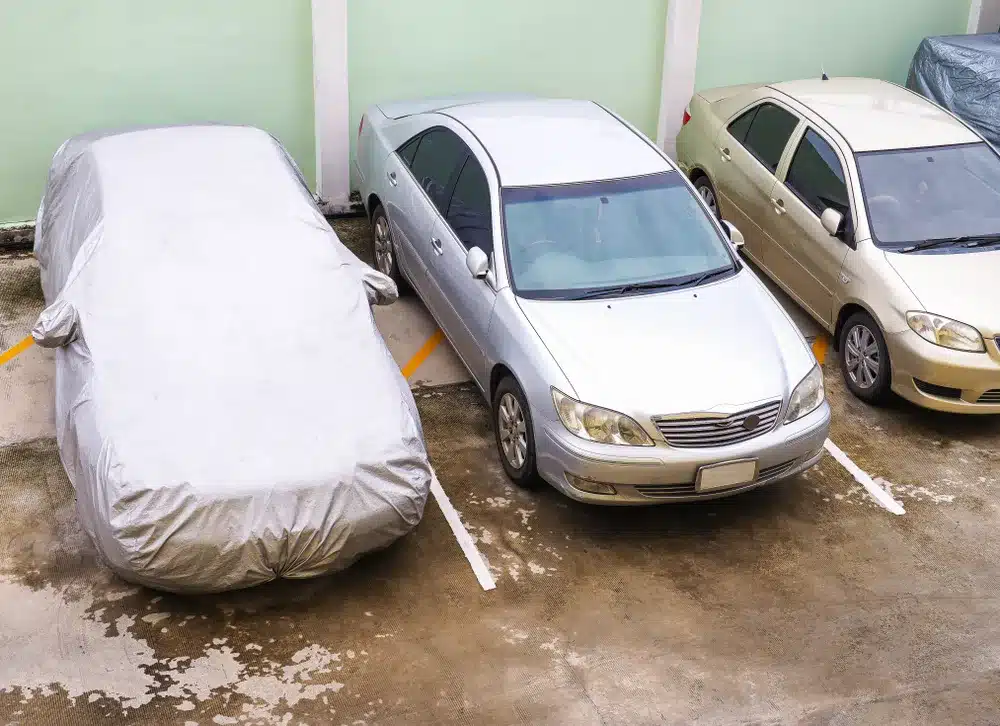
An outdoor parking space exposed to the elements will be cheaper than outdoor vehicle storage spaces under a car cover. And a space at a private indoor facility will be more expensive than a shared indoor car storage facility.
Storage amenities like entry gates with keypad-controlled access, extra storage security features, drive-up units, and climate control can add to the monthly cost.
And long-term vehicle storage duration typically comes at a lower monthly price than short-term vehicle storage fees.
This expert guide will compare the costs of the various vehicle storage options. We’ll also help you find out exactly what storage type you need.
Finally, we’ll reveal how to use Storage.com to find storage deals and the ideal vehicle storage unit near you that has the exact amenities you need for your unique storage situation.
How Much Does It Cost to Store a Car: Average Cost of Vehicle Storage
According to our in-house data here at Storage.com, the national range of vehicle storage is between $17–$187/month. Most people pay around $105/month on average. That said, the average cost of a vehicle storage unit or parking spot varies by the storage unit size. Your typical car can fit in a 10×20 storage unit, which has an average monthly cost of $119/month.
Trucks and smaller RVs can fit in a 10×30 unit, while 40-foot and up units can accommodate larger vehicles, including boat storage. Below are updated average prices for standard vehicle storage sizes, according to Storage.com:
- 10×20 (compact cars/sedans): ~$119/month
- 10×25 (SUVs/pickup trucks): ~$127/month
- 10×30 (large trucks/RVs): ~$149/month
Vehicle storage prices can significantly differ depending on where you live, the type of storage chosen (indoor, outdoor, covered), and the size of your car. These prices are also influenced by the availability of specific unit sizes in your area and at the storage facility in question.
Car storage cost by storage type
Indoor car storage is the most expensive form of car storage, due to the extra protection it offers from weather and the added security – climate-controlled units cost even more.
Outdoor vehicle storage is typically the most affordable option, advisable for short-term storage or vehicles that can withstand exposure to the elements.
Covered storage falls in between indoor and outdoor storage in price. You’re compromising — you still get some protection from the sun and rain, though not from dust, debris, and wind. That said, covered storage doesn’t come with the costly price tag of a fully enclosed space.
Watch this video to learn more about popular vehicle storage types:
By Storage Type
| Type | Avg. Monthly Cost |
|---|---|
| Outdoor (uncovered; traditional parking spaces) | $17–$100 |
| Covered parking (carport-style) | $50–$200 |
| Indoor / enclosed | $150–$270 |
| Climate-controlled storage | +$25–$50 premium |
City-Specific Comparisons
Car storage prices vary significantly depending on what city the storage facilities are in. Major cities with a small supply of space but a high demand stand out from the national averages, with higher costs for car storage than suburban units.
So, how much does it cost to store a car in New York City compared to Los Angeles or Chicago?
Below is the average price in 2026:
- New York: $104–$384
- Phoenix: $35–$248/month
- Los Angeles: $164–$356/month
Regional variations
How much does it cost to store a car from region to region? Besides major city prices, there are lots of factors that influence the price, including weather, accessibility, and scarcity.
- In colder regions, indoor car storage may be more expensive during winter months due to higher demand as people look to protect their vehicles from snow and ice. If you live in a region with harsh winters, you’ll definitely want to winterize your vehicle for long-term storage.
- In coastal or high-humidity areas, there is greater demand for climate-controlled storage units throughout the year, especially during summer, and climate control comes with a higher price.
- Most homes in the West and South don’t have basements, so people often use their garages for storing odds and ends. The high demand can drive up the price of car storage in their area.
Factors Affecting Storage Costs
Several things affect how much you’ll end up paying for car storage. These factors may include, but are not limited to, the location of the facility, the car storage unit size you need, and the amenities available.
1. Location
Facilities in busy urban areas often charge more than those in suburbs or rural locations. Higher property values and taxes in the area can also push car storage prices up.
Paying for a vehicle storage facility closer to your home or work is no doubt convenient, but it could come with a higher price tag.
If you’re willing to drive a little further when looking to store your vehicle for a long-term storage period, you might save a few bucks.
2. Storage unit size
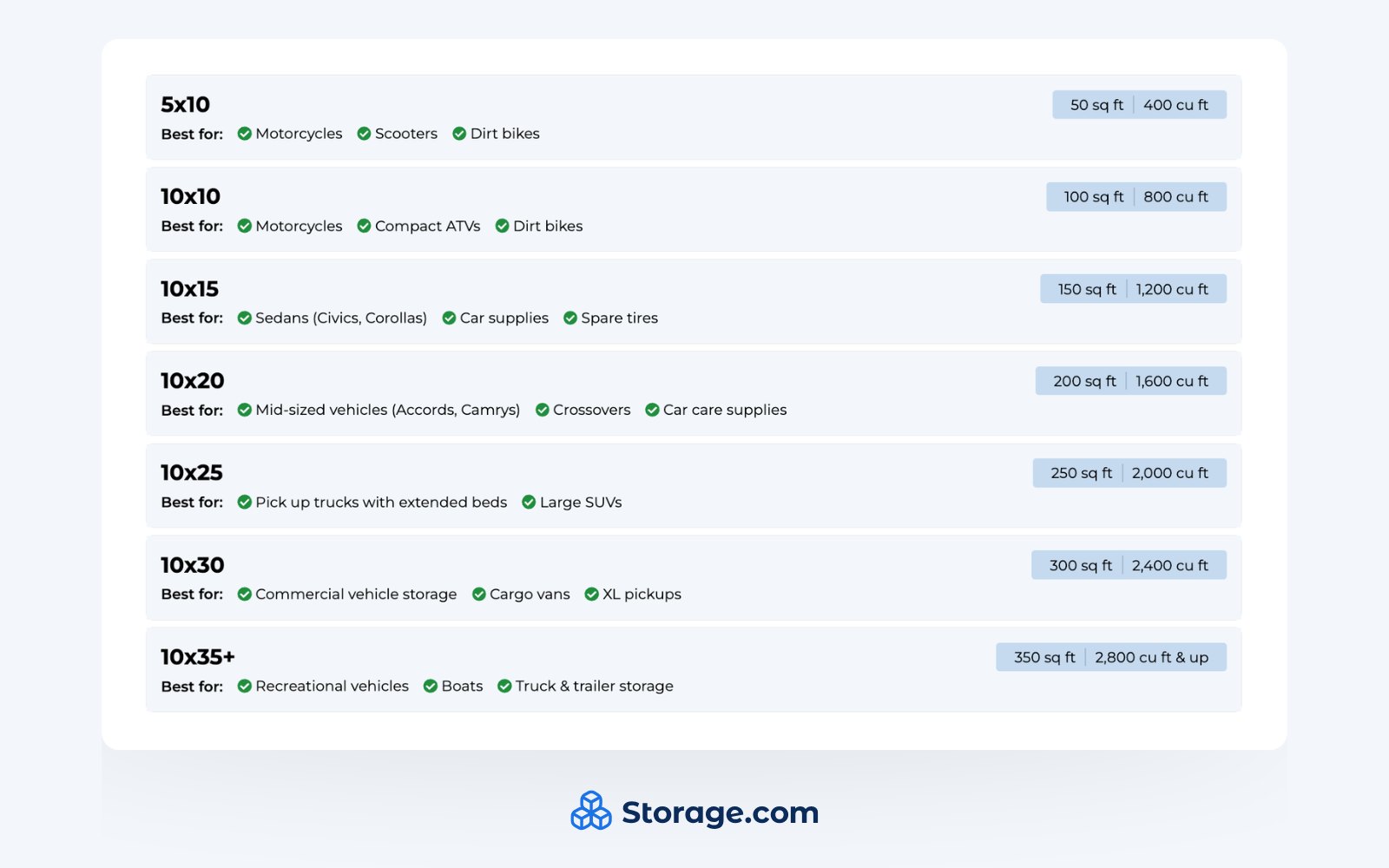
Standard sizes for car storage range from 10×15 feet for smaller compact cars to 10×20 or 10×30 feet for bigger vehicles like SUVs or trucks. The larger the car, the more space it needs, which means a higher cost.
3. Amenities and security features
Some vehicle storage facilities offer added security features, like video surveillance cameras, gated access, 24/7 security, 24/7 access hours, on-site managers, and individual unit alarms.
These facilities often charge a premium price for surveillance systems and security measures. Temperature-regulated storage units, which protect against humidity and temperature swings, can also raise the cost.
Types of Vehicle Storage
Different types of car storage offer different levels of protection and convenience at various prices.
To help you decide which is the ideal option for your vehicle storage needs, let’s examine the benefits of indoor, outdoor, and covered vehicle storage.
| Category | Indoor car storage | Outdoor car storage | Covered car storage |
|---|---|---|---|
| Overview | Best protection from weather, UV rays, theft, and damage. Ideal for long-term storage and for exotic car models that need extra care, like vintage cars or luxury vehicles. Learn more at sports car storage guide. | The most affordable storage option. Suitable for short-term needs or cars that can handle exposure to the elements. | A middle-ground option that provides a roof to protect the car from direct sunlight, some rain, and snow. It offers more protection than outdoor storage but isn’t fully enclosed like indoor storage. |
| Features | Often comes with added security, such as surveillance cameras, alarms, and restricted access. Climate control is also a common feature of indoor vehicle storage, preventing damage from humidity and temperature changes. | Offers minimal protection from weather, theft, and vandalism. Cars stored outdoors may experience damage from the sun, rain, snow, or critters. | Generally includes some level of security, such as gates or perimeter fencing, but may not offer the same advanced features as indoor storage. |
| Accessibility | Safe, enclosed environment similar to a personal garage, often with easy drive-up storage access. | Often provides 24-hour access, making it easy to retrieve your car when needed. | Comes with drive-up access, making it easy to park and retrieve your vehicle. |
| Cost | Generally, indoor car storage is the most expensive option due to the high level of protection and additional features. | Typically, the lowest cost is due to the lack of enclosure and fewer amenities. | Priced between indoor and outdoor vehicle storage, it balances protection and affordability. |
Cost of Car Storage Insurance
Car storage insurance covers damages that happen while the car is parked and isn’t being driven, which is why car storage insurance is often called “parked car insurance.”
If you have a full coverage auto policy, it likely includes car storage insurance or parked car insurance, and you won’t have to add anything. That said, if you plan to put a vehicle into storage for a long time, you likely don’t want full coverage on a vehicle you aren’t planning on driving anytime soon.
In that case, you can get comprehensive coverage that includes car storage insurance or parked car insurance.
The average cost of comprehensive-only insurance is between $12 and $30 per month, depending on the insurance carrier, region, and vehicle make/year/model.
- In all states except two, car storage insurance or parked car insurance is included in the comprehensive coverage umbrella term.
- We suggest you contact your insurance provider and ask if car storage insurance is included before storing a vehicle, and keep proof of insurance on hand for the facility.
That said, keep in mind that if an accident happens while you’re driving a car that only has comprehensive or car storage insurance coverage, the damages your vehicle sustains or causes may not be covered.
How Storage.com Can Help You Find Affordable Vehicle Storage Costs
Finding the right car storage solution doesn’t have to break the bank. Let’s review a few tips for finding a good car storage deal. Then, we’ll talk about how Storage.com can help.
1. Search for discounts
Many storage facilities offer promotions like the first month free, discounted rates for signing a long-term contract, or seasonal deals.
Don’t be afraid to ask for discounts, especially if you’re a senior, a student, or a member of the military.
Use comparison websites to find affordable car storage options near you. These sites often highlight discounts and deals available at local facilities.
2. Evaluate facility amenities
Consider which security features are important for you. Facilities with gated access, surveillance cameras, on-site managers, and individual alarms might cost more but offer better protection.
Think about whether climate control is necessary for your car. If you’re storing a vehicle in a region with extreme temperatures or high humidity, climate control can prevent damage, but it will increase the storage costs.
If you use your car frequently, ensure you have access to facilities with 24-hour availability.
If you plan on wrenching on the car while it’s in storage, be sure the facility allows you to work in the unit. Pro tip: leave a little extra room for shelves full of motor oil, fuel stabilizer, and your mechanic’s tools so that you can conduct routine vehicle maintenance.
3. Consider location and accessibility
If you need to access your car frequently, choosing a facility closer to home or work will be worth the extra money.
If you plan to store your car long-term and won’t need to access it frequently, consider a location outside urban areas. These are often cheaper due to lower land costs and less demand.
But how do you find the exact combination of the storage type and features you’re looking for in your area?
Storage.com is here to help.
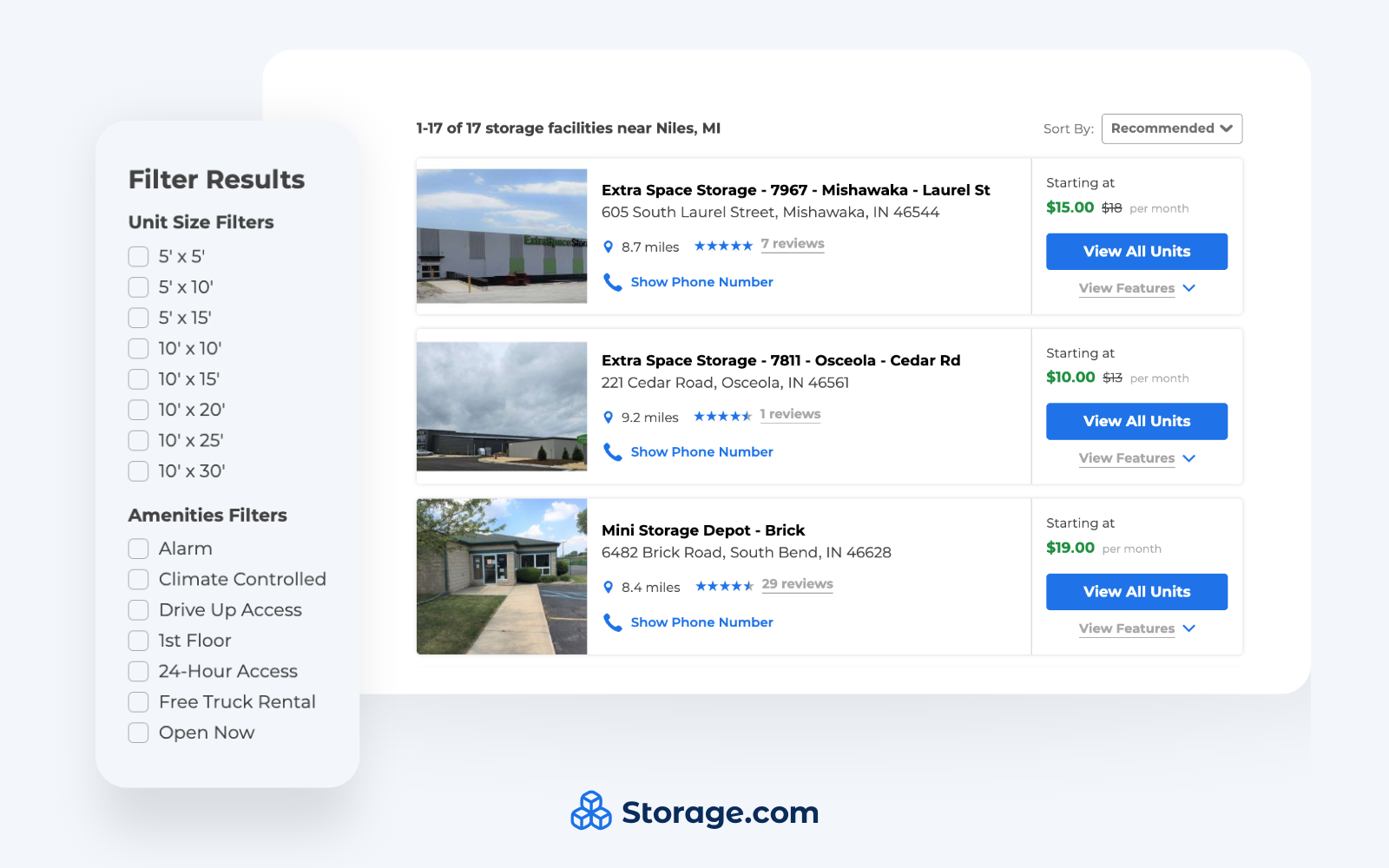
Just punch your zip code into our handy Storage.com search tool, and we’ll help you browse and compare vehicle storage units using amenity filters that isolate the storage facilities in your area that have units available with all your non-negotiable storage features.
Whether you’re a car collector, a mechanic, or just need a place to keep an extra vehicle, we’ll filter through the thousands of local storage facilities for you, making it easy to find the storage unit that best fits your needs.
All you have to do is choose the vehicle storage facility you want and your move-in date, and we’ll take care of the rest!


