
Article takeaways
- The first step to consider when learning how to store a mattress is to spend time preparing your mattress for storage.
- Clean your mattress and let it completely dry before putting it in a protective encasement designed to shield your mattress from humidity changes and pests.
- Wrap your encased mattress with another protective layer for stability, extra protection and an airtight seal. You can even include a silica gel packed in this protective layer.
- Store your mattress in a climate controlled storage unit with drive-up or first-floor access for the best convenience and temperature protection.
We spend approximately one-third of our lives in bed, making our sleep surface one of the most critical household items we own. Whether you are clearing space for a new guest room, downsizing, or relocating, proper preservation of your mattress is essential for long-term health and comfort. Unlike standard boxes or furniture, your mattress is a precision-engineered support system. Improper storage practices, such as bending, side-loading, or exposure to environmental fluctuations, can void your warranty and permanently damage internal springs or foam density. This guide provides the expert-level strategies needed to keep your bed as pristine as the day you bought it.
How To Prepare the Mattress for Storage
Preparation is the foundation of long-term preservation. Before moving your mattress to a storage facility, you must eliminate hidden debris and moisture. Begin by using a vacuum cleaner with an upholstery attachment to thoroughly remove skin cells and dust mites from the surface and tufted areas.
If your mattress has developed subtle odors, lightly sprinkle baking soda over the fabric, allow it to sit for 30 minutes, and vacuum it away completely. For stains, make a paste with baking soda and water, but avoid over-saturating the materials.
Most importantly, you must air out the mattress in a well-ventilated, dry area for several hours. Trapping residual moisture inside a storage unit is the leading cause of mold growth, which can render a mattress unsalvageable.

So, to recap how to prepare your mattress for storage:
- 1. Clean the surface of your mattress with an upholstery cleaner.
- 2. Use baking soda to spot treat stubborn stains in the mattress. Mix baking soda with water to form a paste. Apply the paste to the stain and let it sit for up to 30 minutes before scrubbing out with a damp rag.
- 3. Allow your mattress to dry completely before preparing it for storage to prevent mold and odors from developing from excess moisture.
Fight Allergens with a Good Mattress Encasement
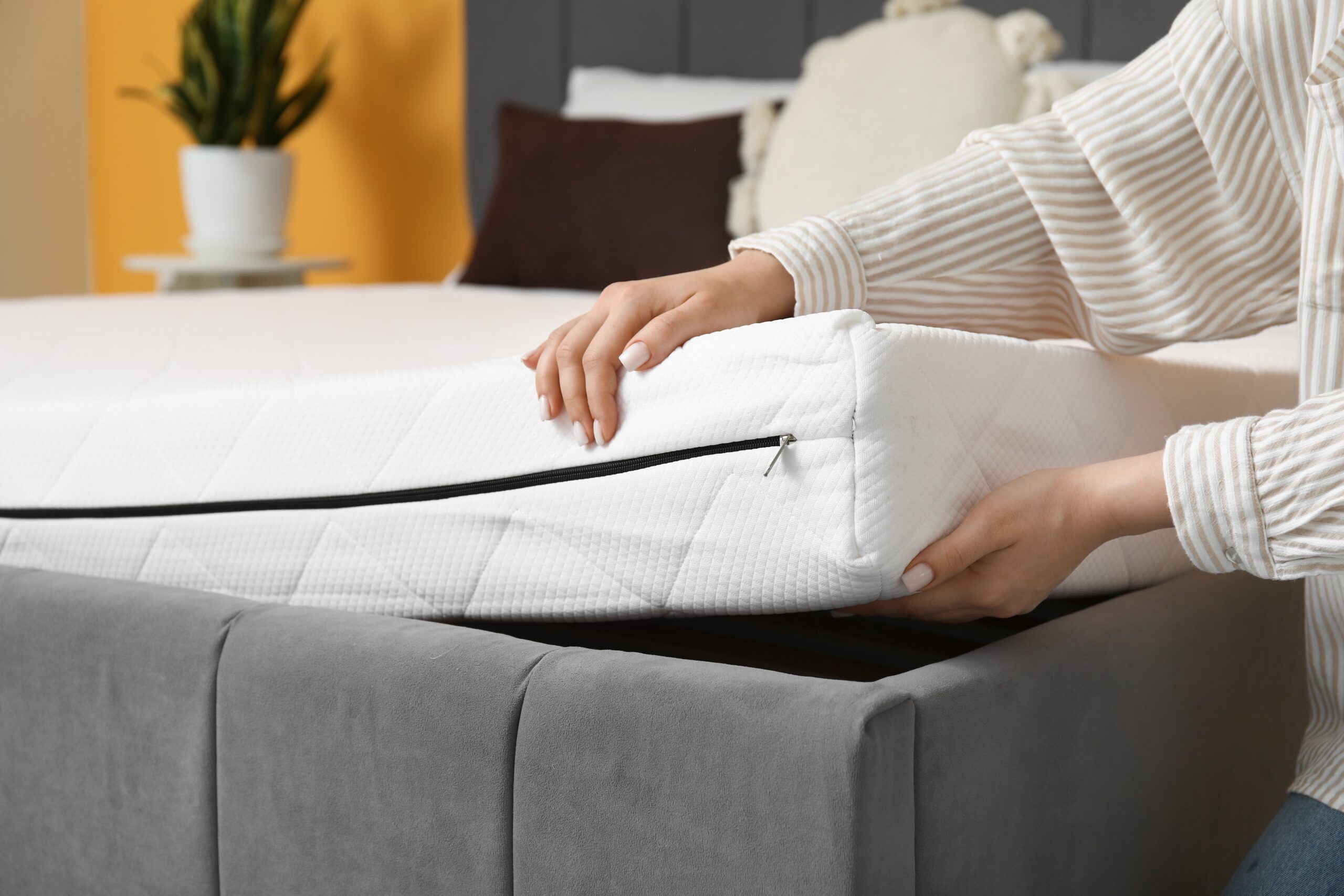
To maintain hygiene during storage, a high-quality mattress protector is mandatory. While a standard sheet offers no protection against the environment, an encasement acts as a barrier against dust mites and humidity. Ensure the encasement fully zips shut and is made of a breathable material.
Avoid cheap, non-breathable plastic sheets that trap condensation. If you are storing a specialized chemical-free mattress, ensure the cover is non-toxic and compatible with the material’s breathability. Regularly inspect the encasement throughout the duration of storage to ensure the zipper remains secure and the fabric is free of tears.
Choose a Good Protective Wrapping
Once your encasement is secured, you may need an additional layer of external defense. A dedicated mattress bag or a heavy-duty storage bag is essential for shielding the bed from dust, dirt, and potential pests while in transit.
When using plastic wrapping, exercise caution: never seal the material so tightly that you create an airtight vacuum. Instead, allow for some air circulation to prevent internal condensation.
For added humidity management, place a few silica gel packets near the mattress to absorb ambient moisture. Remember that the goal is to keep the surface clean without suffocating the materials.
How To Select a Storage Unit for Your Mattress
When choosing where to store your items, look for a reputable storage facility that offers climate-controlled units. Temperature control is non-negotiable for mattresses; foams can degrade under extreme heat, and internal springs can rust in humid conditions. A climate-controlled environment, ideally maintained between 68-72°F by a mini-split air conditioner or similar system, is the gold standard.
When determining your storage unit size, remember that mattresses should be stored flat. A 5×10 unit is generally sufficient for a Queen, while a California king may require a 10×10 unit to remain horizontal. Avoid stacking heavy boxes on top of your bed, as this compromises the support system.
How To Store a Mattress in a Storage Unit
Transportation logistics are just as important as the facility itself. Use a professional moving truck or a cargo van rather than roof racks, which can bend or tear the fabric. Once at the unit, place your mattress flat on a sturdy bed frame or raised off the floor using box springs to ensure proper airflow beneath the surface.
If you are storing a Sleep Number bed, consult the manufacturer’s guidelines regarding the air pump and components. Avoid storing the mattress on its side for long-term storage, as this causes the internal components to shift and sag.
Unpack and Inspect the Mattress After Storage
When you retrieve your mattress, inspect the external covering for any damage before moving it. Upon reaching your home, remove the protective bags and air out the mattress for at least 24 hours in a climate-controlled room.
If you notice any irregularities in the tufted areas or surface tension, allow the mattress time to decompress. If the mattress was stored for a long duration, it is common for the materials to feel slightly firm initially; regular use will help the internal support system recalibrate. By following these steps, you ensure that your return to a comfortable sleep surface is seamless and healthy.
How To Store a Mattress with Storage.com
Mastering the art of mattress storage involves more than just finding a space; it requires a commitment to protecting the structure and hygiene of your bed. By using climate-controlled storage, ensuring your mattress stays flat on a support system, and avoiding moisture-trapping wraps, you effectively protect your investment.
Whether you are an interior designer preparing a guest room or a homeowner managing a move, these strategies are designed to keep your mattress in peak condition.

Storage.com has a network of thousands of the top storage unit facilities near you, so you can store your mattress in the best unit for your storage needs.