
Article takeaways
- The best way to store vinyl record albums is upright, never stacked, in a room that stays around 65-70°F with 40-50% humidity.
- Inner sleeves (polyethylene or rice paper) and outer sleeves (polypropylene) protect against dust, static, and scratched album art.
- Heat, direct sunlight, and humidity swings are the top causes of warped records and moldy covers.
- Sturdy, ventilated shelving built for records (not stacked bookshelves or plastic bins) prevents leaning and pressure damage.
- For large or high-value collections, a climate controlled storage unit protects records from the temperature and humidity swings that home storage can’t always control.
If you’ve built a real collection, from a worn copy of Abbey Road to whatever oddball novelty record you can’t bring yourself to get rid of, it deserves better than a milk crate in the closet. The best way to store vinyl record albums comes down to four things: keep them upright, keep them protected in sleeves, keep the room’s temperature and humidity stable, and keep them clean. Skip any one of those, and you’re looking at warped discs, moldy covers, or scratches that never should have happened, especially in the long term.
What Vinyl Records Need to Stay in Good Shape
Vinyl is a soft plastic, and soft plastic responds to heat, pressure, and moisture. Get any of those wrong for long enough and the damage is permanent. Here’s the quick version of what your records need:
| Condition | Ideal Range or Practice | What Happens If You Skip It |
|---|---|---|
| Temperature | 65-70°F (18-21°C) | Records soften and warp |
| Humidity | 40-50% | Mold on covers and paper liners; brittleness if too dry |
| Position | Vertical, upright, not tightly packed | Warping, ring wear, bent covers |
| Light exposure | Low or no direct sunlight | Faded album art, heat-related warping |
| Sleeves | Poly or rice paper inner sleeve, polypropylene outer sleeve | Dust, static, scuffed covers, scratched vinyl |
How to Store Vinyl Records the Right Way

Store Records Vertically, Never Stacked
Records are not coasters and they’re not meant to be piled up. Stacking puts weight and pressure on the discs at the bottom of the pile, and that pressure warps vinyl fast. Stand every record upright on shelving rated to hold their weight without sagging.
“I like open-shelving units with a mid-century feel, so they double as a display piece for my favorite album covers.”
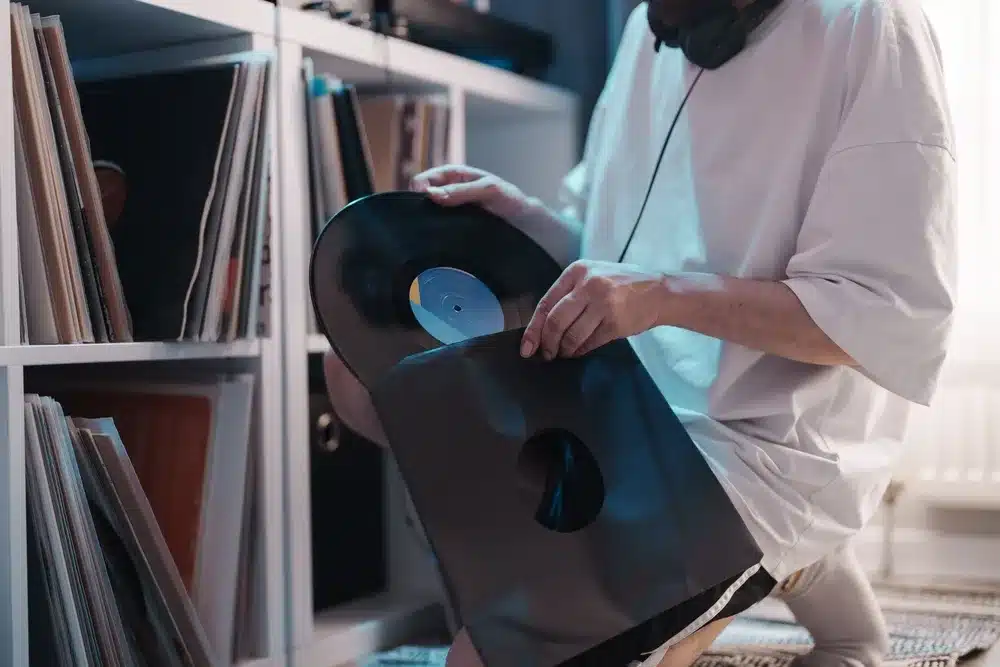
Open shelving keeps records upright and gives you airflow at the same time.
Use Inner and Outer Sleeves for Real Protection
A record without sleeves is a record collecting dust, static, and scratches every time it’s handled. Wang recommends polyethylene or rice paper inner sleeves: “They protect records from dust, static, and general wear. Polyethylene sleeves are really good because they’re sturdy, while rice paper is gentle and minimizes any micro-abrasions that might impact sound quality over time.”
For the outer sleeve, he points to polypropylene for its thickness and durability, which protects album art from fingerprints and water damage. One thing Wang flags that a lot of new collectors get wrong: leaving records in their original shrink wrap. It seems protective, but shrink wrap traps moisture and can encourage mold, especially in humid climates. Pull it off and use a proper outer sleeve instead.
Keep the Room’s Temperature and Humidity Stable
This is the condition most collectors underestimate.
“High temperatures can soften vinyl, leading to warping, while excess moisture can encourage mold growth on the record and its sleeve.”
Effy Terry, a Certified Professional Organizer with more than 30 years of experience, agrees: too much humidity leads to mold, and too little can make records brittle.
Consistent conditions matter even more for rare or valuable pressings, since fluctuations cause static buildup, dust accumulation, and gradual degradation of both the vinyl and the cover art. Collectors with unpredictable basements or attics often add a dehumidifier, or move the collection somewhere steadier altogether.
Clean Records Before Long-Term Storage
Dust adds crackle. Grime adds permanent damage. Wang’s routine starts with a soft, anti-static brush or microfiber cloth before and after every play, followed by a dedicated vinyl cleaning solution applied in circular motions that follow the grooves. Skip household cleaners entirely; they’re too harsh for the surface.
Terry echoes the same caution around tap water and alcohol-based cleaners, which can strip the protective coating off a record. For serious collections, she suggests an ultrasonic cleaner as a worthwhile investment before anything goes into long-term storage.
Choose Furniture Built for Records, Not Bookshelves
A standard bookshelf or a plastic storage bin isn’t built for the weight or the shape of an LP. Look for record-specific cabinets or shelving units like IKEA’s Kallax, which Terry favors for its open design.
“The open design of the Kallax line allows for airflow to prevent humidity buildup.”
She adds that it’s inexpensive, easy to assemble, and sturdy enough to handle the job. Wang adds that furniture designed specifically for records often includes dividers for sorting by genre, artist, or era, which also keeps records from leaning against each other and stressing the vinyl over time. Whatever shelving you choose, make sure it’s deep enough that the sleeve doesn’t overhang the edge.
Vinyl Storage Mistakes That Damage Records
| Mistake | Why It Damages Records |
|---|---|
| Stacking records flat | Weight and pressure warp the discs underneath |
| Storing near a window or heat source | UV rays fade covers; heat softens and warps vinyl |
| Packing shelves too tightly | Causes ring wear on covers and pressure warping |
| Storing in an attic, basement, or garage | Humidity and temperature swings cause mold and warping |
| Keeping records in original shrink wrap | Traps moisture and encourages mold growth |
| Skipping routine checks | Mold, mildew, or warping goes unnoticed until it’s severe |
How to Pack and Transport Vinyl Records Safely
Moving records, even across town, takes more care than tossing them in a moving box.
“Moving records without proper protection can lead to all kinds of problems, from warped discs to scratched surfaces.”
Pack records upright in boxes built for vinyl, never flat, and add a layer of bubble wrap or cardboard between roughly every ten records to keep them from shifting.
Label boxes as fragile, but for anything valuable, it’s often worth transporting it yourself rather than handing it to movers. Heavy-duty crates made specifically for records are a worthwhile investment if you’re moving a large collection. And never leave records in a hot car. If you’re driving them somewhere, keep them in the air-conditioned cabin, not the trunk, and give them a few hours to acclimate to their new environment before unpacking and re-shelving.
The Best Way to Store Vinyl Record Albums Long-Term
Home shelving works fine for day-to-day rotation, but large or high-value collections often outgrow what a house can reliably control. Climate controlled storage units maintain stable temperature and humidity year-round, which matters most for collectors without the space, or the climate control, to protect a growing collection at home. It isn’t the cheapest option, but for rare or valuable pressings, it’s often worth the cost: without climate control, records are exposed to the warping, mold, and cover deterioration that can permanently reduce their value.
For high-value collections, Terry also recommends storage insurance, since it protects against theft, fire, or damage, along with a professional appraisal or a reputable collector’s guide and documentation like photos, serial numbers, and appraised values.
If you’re only dealing with a few dozen records, a good shelf at home is the best way to store vinyl record albums. Once a collection outgrows what your closet or spare room can climate-control on its own, a climate controlled storage unit is the more reliable long-term option.
Store Your Vinyl Records Safely with the Help of Storage.com
The best way to store vinyl record albums isn’t complicated, it’s just consistent: keep them upright, sleeved, clean, and out of extreme heat, humidity, and sunlight. Do that and a collection can last for decades without a single warp or scratch. When a collection outgrows what your home can reliably control, a climate controlled storage unit gives it the stable environment it needs.